State guide availableSources checked 6 Oct 2026
Uttar Pradesh
Central and UP amounts by system size, the order in which they are paid and how to apply, checked against official sources.
Explore UP guidance
Independent rooftop solar guidance
Before you choose an installer, understand your starting system size, indicative cost and the subsidy checks that matter. Start with your electricity bill.
First, see how it works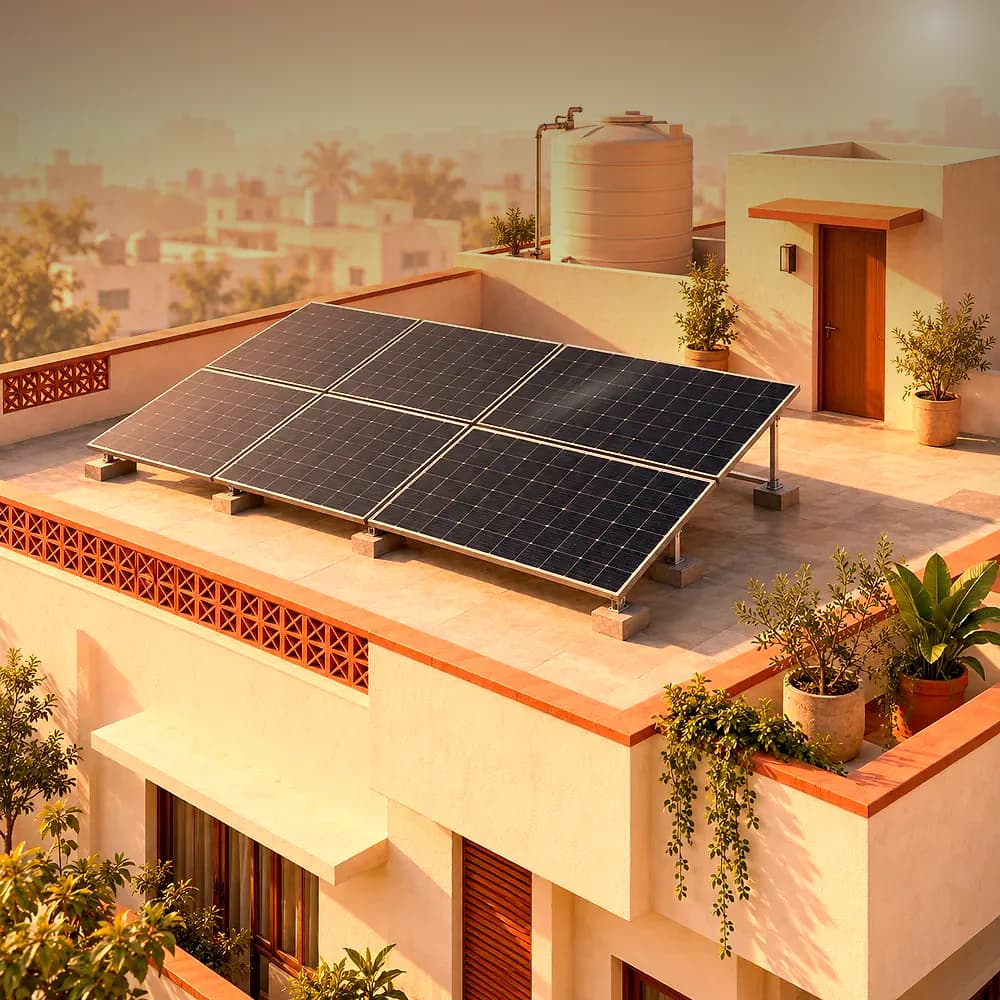 Every roof has its own context
How an estimate is built
A small start. A clearer picture.
Choose a range to see what else matters before anyone suggests a system size.
A bill amount alone cannot produce a reliable kW, price or savings figure.
Your next useful detail: monthly units. Look for ‘units consumed’ or ‘kWh’ on your bill.
Your selected bill range
Choose a range to begin
Your range helps identify the details worth checking next. No system size is assumed.
This preview stays qualitative. Add monthly units in the calculator for a starting size and indicative cost.
Get my detailed estimateA considered path
Start with monthly electricity units, your bill and the context of your roof.
See the starting size, generation and cost range alongside their sources and limits.
Take the estimate into your conversation. Compare proposals on the same terms.
Read the price, not just the number
A useful quote shows the whole picture. Your roof, equipment and the work included all shape the final amount.
Monthly units and usable roof space set the starting point.
Explore the calculatorPanel, inverter and safety component choices shape the quote.
Mounting, shade and roof condition need a site assessment.
Ask what labour, access and commissioning work are included.
Look for wiring, protection, earthing and metering in the written quotation.
Check eligibility separately from the full installed price, and plan how you will pay before any grant arrives.
Compare the same equipment and scope. Then compare the total.
Subsidy, with the context it needs
Understand eligibility, the source and the payment process before relying on a figure. Keep the full installation price separate.
Confirm the property, connection and scheme conditions.
Understand central and state support, such as the UP top-up, on their own terms.
Check current application and payment steps at the official source.
Scheme sources reviewed:
Read official rates and conditions in the guide. The calculator does not determine individual subsidy or net cost.
Official PM Surya Ghar portalThe SolarKhoj approach
Solar is a considered decision. Good information makes the first steps feel simpler.
Information first, with no government affiliation implied.
Understand what an estimate needs, and where its limits are.
Changing figures belong with a source and a verification date.
Move to a conversation when you are ready. The choice stays yours.
A checklist, not a live quote or a vendor rating.
Compare the details
Put the same checklist against each proposal; the two-quote example shows how. Equipment, scope and service terms make the comparison meaningful.
SolarKhoj does not currently assign installers or claim that every installer has been checked.
Rooted in local context
Local DISCOM, tariff and scheme processes need local checks. This is our initial research and content focus, not a claim of service in every PIN.
Central and UP amounts by system size, the order in which they are paid and how to apply, checked against official sources.
Explore UP guidanceA region with several local contexts. The subsidy guide explains Delhi's current policy position; detailed scheme and utility figures will follow the relevant checks.
A little reading. A clearer view.
Before you begin
A good decision starts with knowing what to ask.
Another question? Ask usIt is a useful starting point, but the bill amount alone is not enough. Monthly electricity units, roof space, usage pattern and local rules should be checked before recommending a size. The solar calculator starts from units, and the sizing guide explains why.
System capacity, equipment, roof structure, electrical work and the installer's scope all affect a quote. Compare the same scope before comparing final prices, and use the indicative cost by size as a reference point.
Do not assume that it is. Eligibility, application steps and payment process depend on the current scheme, and support is paid after commissioning. Read how the subsidy is paid and ask for a written quote that separates the system price from any subsidy.
Scheme amounts depend on system size and eligibility, so they sit on the subsidy guide with their official sources and the date they were checked, rather than in a homepage summary. In Uttar Pradesh the state adds its own top-up.
Look beyond the headline price. Check system size, component models, mounting and electrical work, metering responsibilities, warranties, timeline, taxes and after-sales support. The quotation guide shows the method, and the installer checklist keeps track of the answers.
No. The homepage preview is available without sharing a phone number. You decide whether to start a conversation later.
No. This is an independent information and lead-generation service designed to help you understand options before speaking to a solar professional.
Your next step
Understand what your home may need before deciding which solar options to discuss.